
Editing Services
Editing is a complex, multi-step process. Most manuscripts will need all stages, from developmental editing through proofreading, before publication. However, not every manuscript needs all of the stages to be completed by the same editor. An author seeking traditional publishing might engage freelance developmental and copy editing services before shopping their manuscript out to agents, or an agent might recommend developmental and copy editing before they shop the manuscript out to acquiring editors at publishing houses, who will take care of the rest. On the other hand, an author who wishes to self-publish their work might seek all four major services for their manuscript, if they have the budget. And on the corporate side, freelance editors often work on contract for traditional publishing houses, editing any manuscripts the house has acquired.
Please browse the editing stages below for a better understanding of what each stage entails and whether it might be a good fit for your manuscript.
-
Developmental editing focuses on the big picture of your story. For fiction: is the plot fulfilling and meaningful, do the characters have motivation and depth, is the timeline coherent and fitting? For non-fiction: are the arguments logical, are the theses clear, is the evidence relevant? For all books: does the book take the reader on a journey, and is that journey compelling? Developmental editing is done first, because a book can be excellently crafted at the sentence level, but it will still feel lifeless if the big picture is neglected. And, on the same vein, readers are willing to overlook many flaws at the sentence level if the story is compelling enough.
-
Copy editing (or copyediting, depending on who you ask—and copyeditors care about this sort of thing) focuses on the details of how your story is executed. If developmental editing is the what, copy editing is the how. For fiction: are all the character names spelled consistently throughout the story, is non-standard dialogue represented respectfully, are the details of setting and character consistent from chapter to chapter? For non-fiction: are all the sources cited correctly in a consistent style, are technical terms defined and used appropriately, is the appropriate register of speech being used for the target audience? For all books: are all the sentence fragments intentional, are the conventions of American English consistently applied, have homophones been correctly identified? All of the small details, from punctuation to spelling to grammar to style, are addressed in a copy edit. A developmental edit ensures the story is compelling; a copy edit ensures it is polished.
-
Formatting and typesetting refer to preparing a clean manuscript for publication, usually in both ebook and print form. For fiction: are the chapter header styles consistent and appropriate to genre? For non-fiction: are the images, figures, and citations appropriately formatted and cross-referenced? For all books: are the font, line spacing, and margin size appropriate for the genre? Is the author name, book/chapter title, and page number applied correctly in the header/footer? Are there any orphaned words hanging past the end of a paragraph, or any widowed lines hanging past the end of a page? Does the table of contents accurately reflect the contents of the book? Formatting and typesetting are done after all edits are finalized, as any change at this stage can require significant adjustment.
-
Proofreading is the final check, after the manuscript has been formatted and typeset into proofs, to ensure that no error goes to print. This is the stage where everything is double- and triple-checked with a fine-tooth comb to identify anything that could have possibly been missed at the earlier stages. It is impossible to guarantee an error-free manuscript, but this is the step in the process where errors are most ruthlessly hunted.
-
Tutoring and coaching are traditionally seen as services for students or people who are struggling with a subject, and while that can be true, that is not the limit. Anyone who wishes to improve their writing craft can seek a tutor or a coach to identify their strengths and weaknesses and provide a plan for improvement. All of the services listed above aim to improve a specific story, but the same techniques and principles can be applied to the craft of writing in general. Often this takes the form of critique, where a sample work is supplied, feedback is provided, and the work is revised and submitted for further critique. The feedback in these sessions is geared toward improving the author’s overall craft, not just the story at hand, and the knowledge gained is applied to future works.
If you have questions or would like to inquire about editing services, please reach out to me. I can answer any questions you might have, and I provide free estimates for my services.
My Process
It all starts when you reach out to me…
When you reach out to me, I’ll email you back within one business day. You’ll learn a little about me and what I can do for you, and I’ll learn a little about you and what you need from me. I’ll answer any initial questions you may have, and if we’re a good fit, we’ll schedule a preliminary meeting.
Initial Contact
In person or by video call, we’ll meet to discuss your project. I’ll want to know everything—what it’s about, how long it is, what you’re hoping to do with it, any deadlines you may have… all the questions! We’ll discuss in more detail what kind of editing you want, and, based on a small sample of your work, I’ll give you a free estimate for the services you’re interested in. The estimate process may take a few days, depending on how complex the project is to assess.
Preliminary Meeting
Once you’re happy with the plan, I’ll get to work! Editing is a long and involved process, and we’ll meet again at every major checkpoint. At the end of each stage, you’ll receive deliverables from me: an edited manuscript with suggestions for you to review, a style sheet with a list of the editorial decisions I made along the way, and a letter summarizing my process and thoughts are the most common examples.
Rest assured that you are the author of the work, and absolutely nothing about it will be changed without your express permission. My job is to bring your attention to potential issues, explain why they are issues, and propose solutions. I will never rewrite your story or tell you that a change is non-negotiable. We are a team with you in the lead, and our goal is to bring the best possible version of your book to publication.
Editing
Have questions? Reach out!
I’m happy to answer any questions you might have.
Portfolio
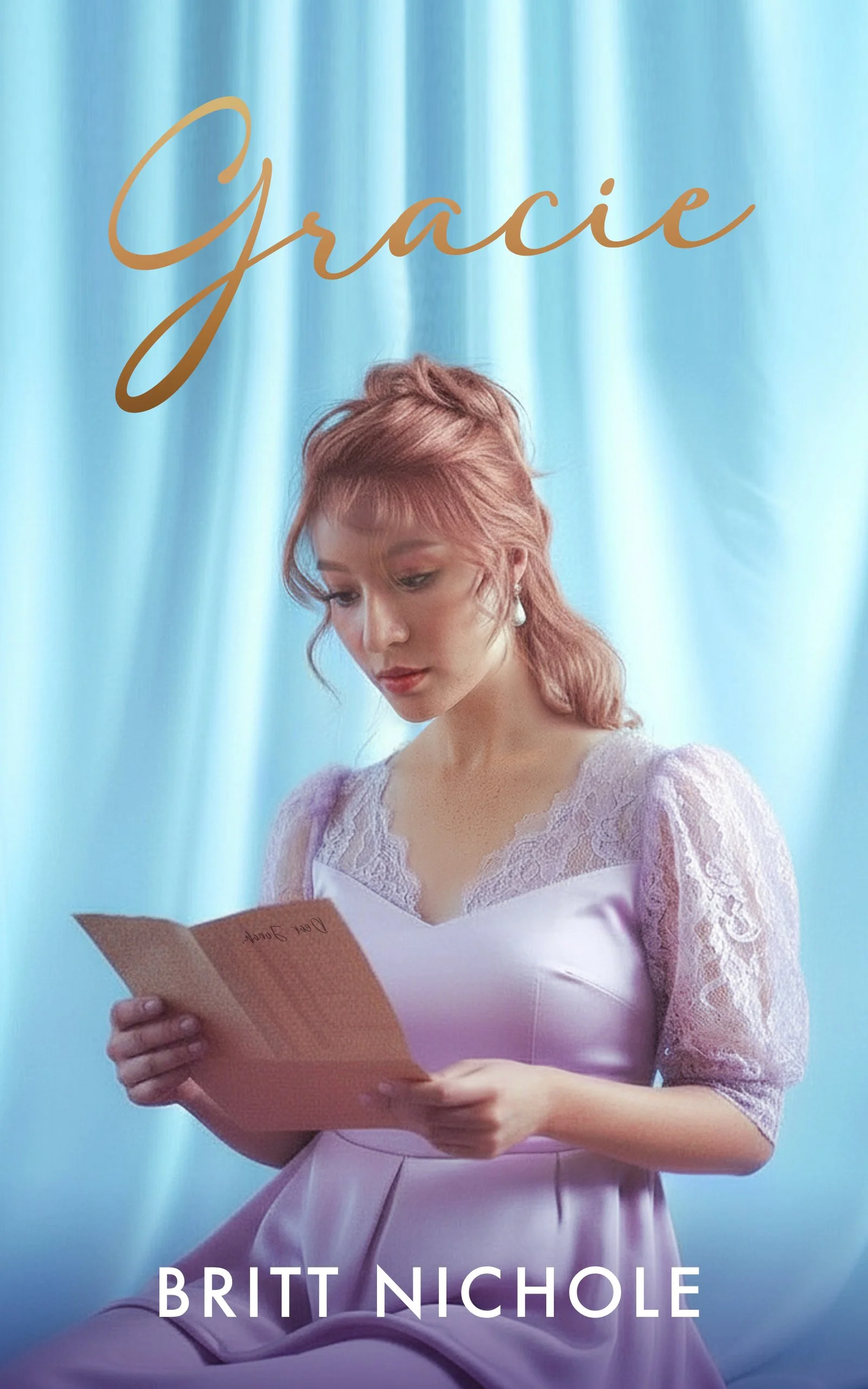
Gracie
Most girls probably don’t go around picking up guys at family funerals.
Gracie was seventeen when her grandfather died. Grandpa was the one person in Gracie’s life who believed her capable of anything despite her right-sided cerebral palsy. So, when her parents decided to stay with Grandma for the summer, Gracie wasn’t sure what to do with herself. She certainly didn’t expect to meet Elliott, a family friend who showed up at the funeral with his own grandparents to pay their respects.
Elliott was sweet, funny, and had the prettiest oceanic eyes that Gracie had ever seen. But he was able-bodied. Gracie’s one serious relationship had ended in disaster, and she was terrified of trying to trust somebody like Elliott again… Read more on Amazon
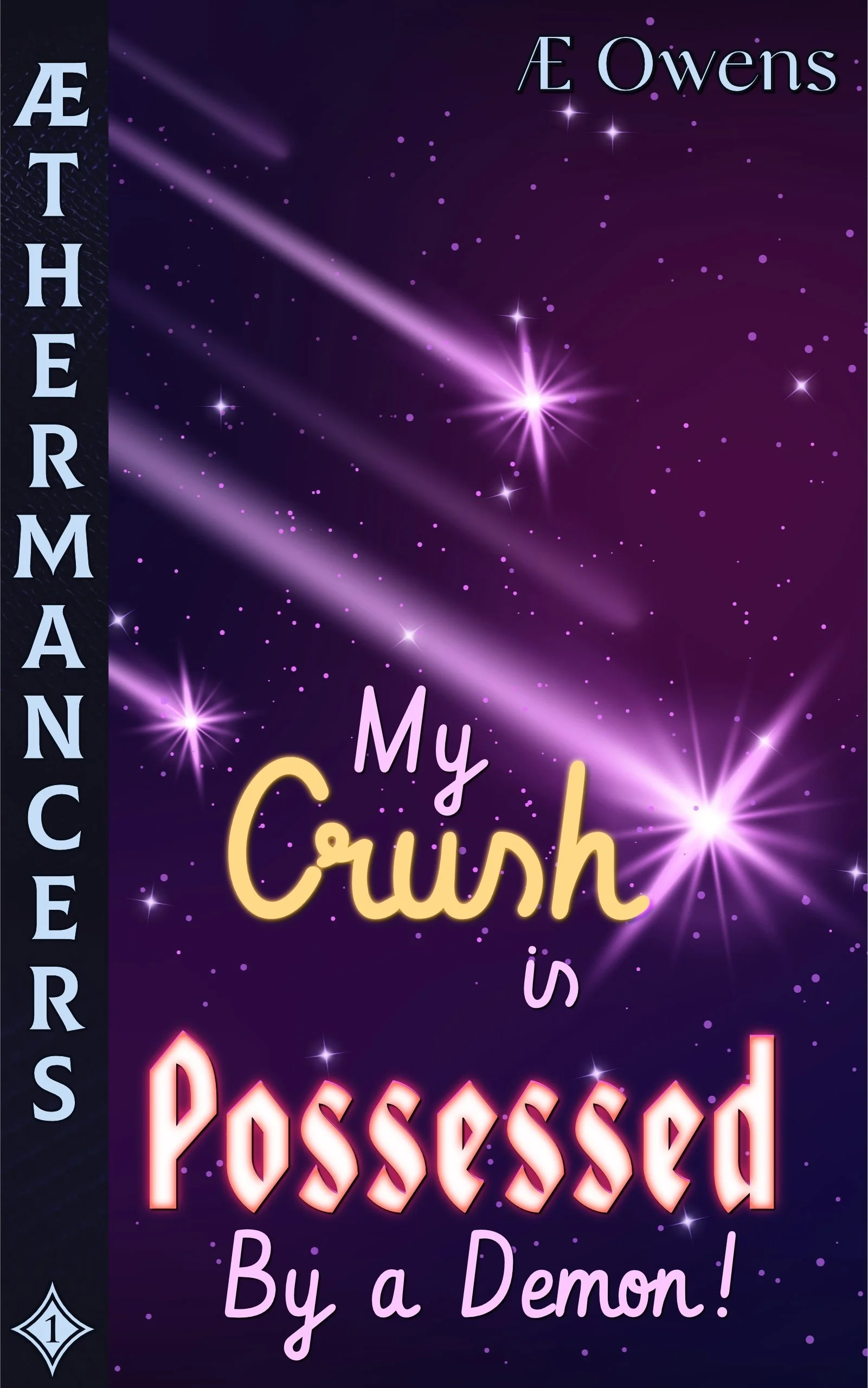
My Crush is Possessed by a Demon!
Hi! My name is Alexis, and I'm everything you'd want in a Magical Girl! I'm creative (which is why my bestie Bryan is relying on me to help him get a part in the school play), I'm wickedly cute (which is what I hope lands me a chance with the best boy in school, Angel), and I'm fearless (which is going to be necessary, because that same boy is in danger of being controlled by my arch nemesis and possible succubus, Stephanie) and lately I seem to be able to control the wind (like, what is up with that?)! Juggling all this awesomeness is hard, especially when it's just me and my dad.
I sure hope nothing goes wrong! Like, I don't know, demons? Read more on Amazon